
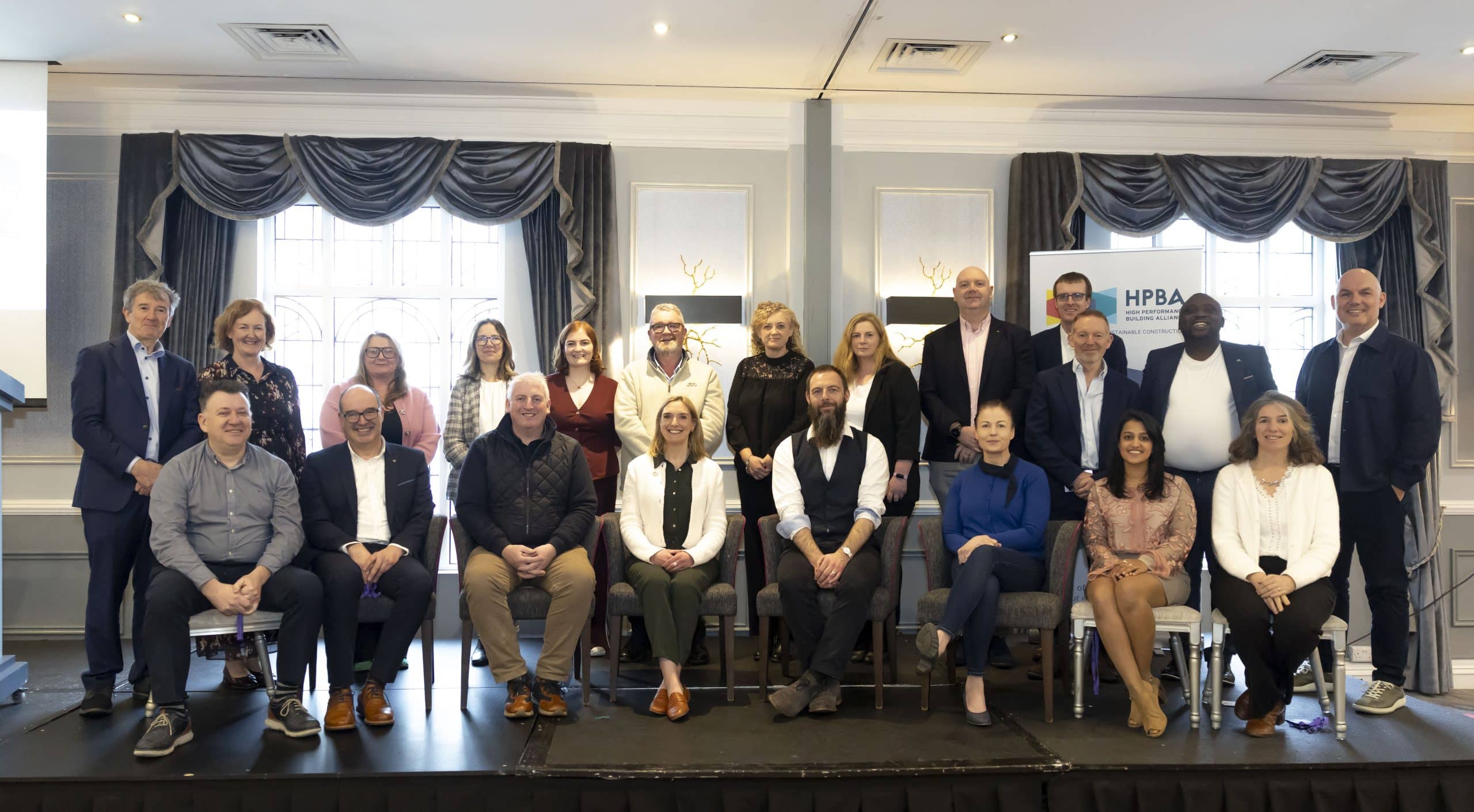
Pictured from left to right: Cllr. Garry Laffan, Amanda Stewart, Elizabeth Hore, and Dr. Barry McCarron

The High Performance Building Alliance (HPBA) is an Irish Government and UN approved Centre of Excellence, dedicated to addressing climate change through industry informed research and upskilling, to optimise the sustainability of the built environment.
Our mission is to advance the United Nations’ Sustainable Development Goals, the Framework for Energy Efficiency Guidelines, the Paris Climate Accord, and Ireland’s Climate Action Plan. We are dedicated to leading and championing high-performance buildings and nearly zero-energy buildings, both new and retrofit, while increasing knowledge, capacity, and demand for low-carbon emission buildings. HPBA fosters innovation, promotes sustainable solutions, and collaborates to create environmentally, economically, and socially vibrant communities.

The High Performance Building Alliance’s Net Zero Construction Symposium 2026

The High Performance Building Alliance’s Net Zero Construction Symposium 2026
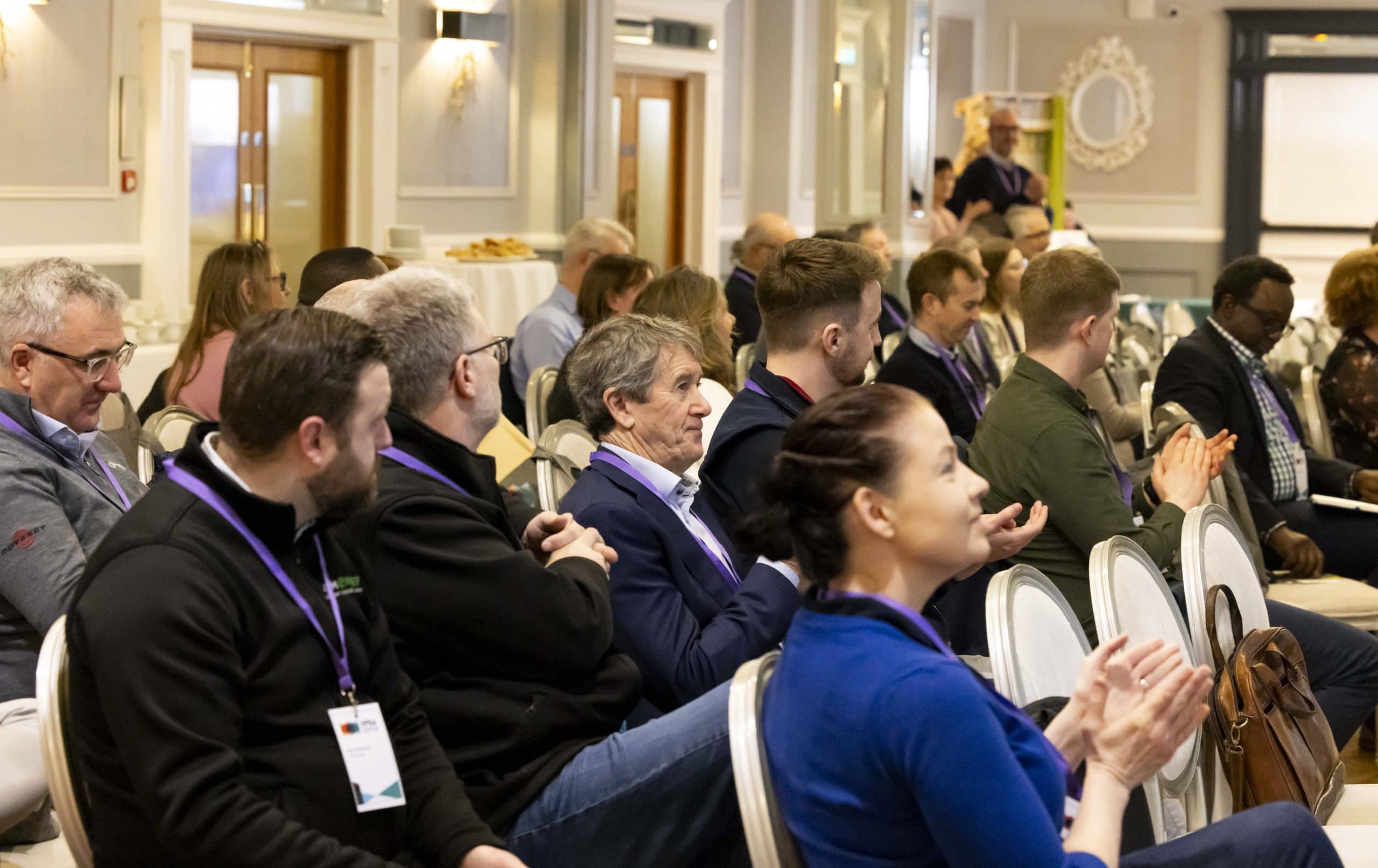
The High Performance Building Alliance (HPBA) hosted a highly successful Net Zero Construction Symposium in Wexford on Wednesday, 21st January, gathering leading voices from across Ireland’s construction, sustainability, and innovation ecosystems. The event, opened by Cllr. Garry Laffan, Mayor of Wexford and Chair of the HPBA Board, brought together an impressive array of technical experts, policymakers, and industry practitioners committed to reshaping Ireland’s built environment for a net-zero future.
The symposium, organised by HPBA CEO Amanda Stewart, convened specialists spanning circularity, biobased materials, business support consultancy, modern methods of construction (MMC), supply chain logistics, skills and education, and applied research. The collective purpose was clear and urgent — to examine Ireland’s pathway to decarbonisation and the modernisation of its housing and construction sectors, especially in the context of accelerating housing delivery amid growing calls for sustainable transformation.
Yet amidst the optimism and collaboration, a critical insight emerged: while innovation is thriving within individual domains such as materials, energy, and skills, Ireland currently lacks a coordinated strategic framework that connects these activities into a coherent national approach.
This absence of integration, delegates warned, is leading to “relative chaos” — where the drive for urgent action risks undermining long-term sustainability, capability, and value. The symposium highlighted the particularly noticeable absence of lifetime value considerations in Modern Methods of Construction (MMC) solutions, signalling a gap between innovation and long-term planning.
However, the event also showcased the collaborative spirit that sets Wexford and the South East apart. By convening a broad spectrum of expertise and fostering open dialogue, the HPBA is actively creating a platform for alignment and collective action — the very antidote to the fragmentation currently hindering progress nationally.
“This symposium represents more than a conversation — it’s a movement,” said Cllr. Garry Laffan, Chair in his opening remarks. “Through the HPBA, Wexford is positioning itself as a South East leader in high-performance, low-carbon building. Our strength lies in working together, across disciplines and sectors, to engineer real value for Ireland’s future.”
Founded as a joint initiative between Wexford County Council and the Waterford and Wexford Education and Training Board (WWETB), the High Performance Building Alliance is dedicated to driving innovation, skills development, and sustainable construction excellence across the region. The HPBA provides a collaborative framework for industry, academia, and government to integrate research, best practice, and enterprise towards Ireland’s net zero ambitions.
The success of the Net Zero Construction Symposium marks an important step forward — both for Wexford’s emerging leadership role and for Ireland’s wider journey to a resilient, high-performance built environment.
World Business Council for Sustainable Development (WBCSD) Circular Transition Indicators
World Business Council for Sustainable Development (WBCSD) Circular Transition Indicators
HPBA were delighted to participate in a pilot project with WBCSD which took place from May 2024 to early 2025, developing and testing a tool which tracks materials to be reused in building projects.
The built environment is responsible for nearly 40% of global CO2 emissions and half of all material use. Yet only 10% of building materials are reused after demolition. This linear model is no longer sustainable.
At the same time, companies in the sector face rising regulatory pressure, growing investor scrutiny, and increasing demand for sustainable and circular business models.
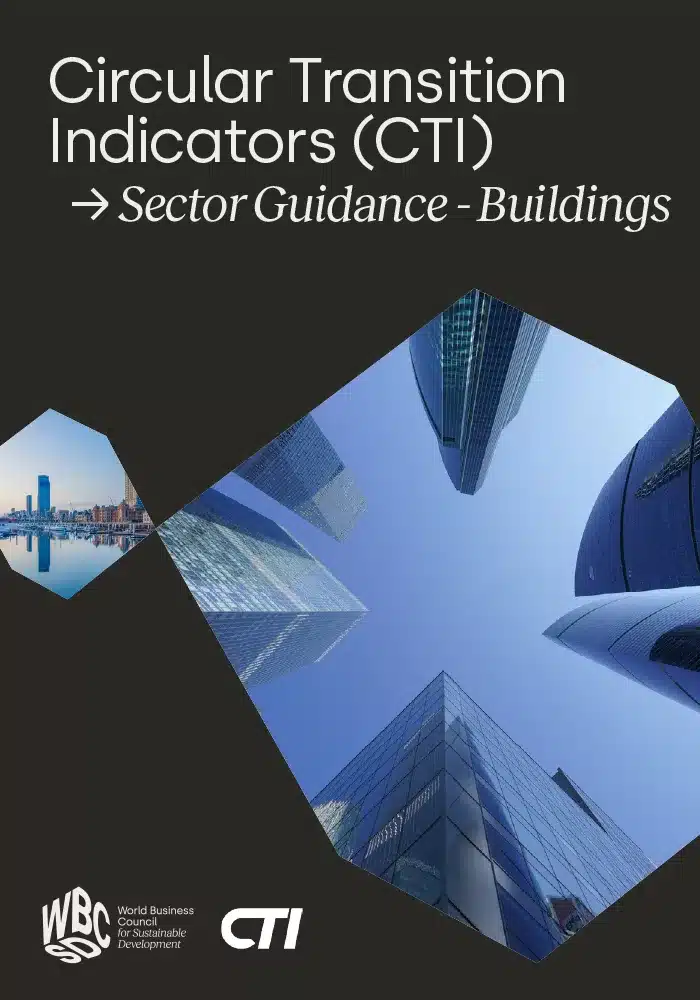
Following the pilot project CTI for Buildings was developed by WBCSD – World Business Council for Sustainable Development, in collaboration with Arup and Arcadis. This new guidance brings a lifecycle-based approach to measuring and improving circular performance across buildings and projects.
The Circular Transition Indicators (CTI) framework helps companies set clear circularity roadmaps and targets, track progress and support regulatory compliance, cut embodied carbon emissions by up to 96% by 2050, and strengthen investor confidence and unlock competitive advantage.
This is a practical tool for companies ready to lead the shift toward a more resource-efficient, low-carbon built environment.
Download the guide here: Circular Transition Indicators (CTI) for Buildings – Sector Guidance | WBCSD
Sustainability in the Built Environment Summit with Business Post
Sustainability in the Built Environment Summit with Business Post
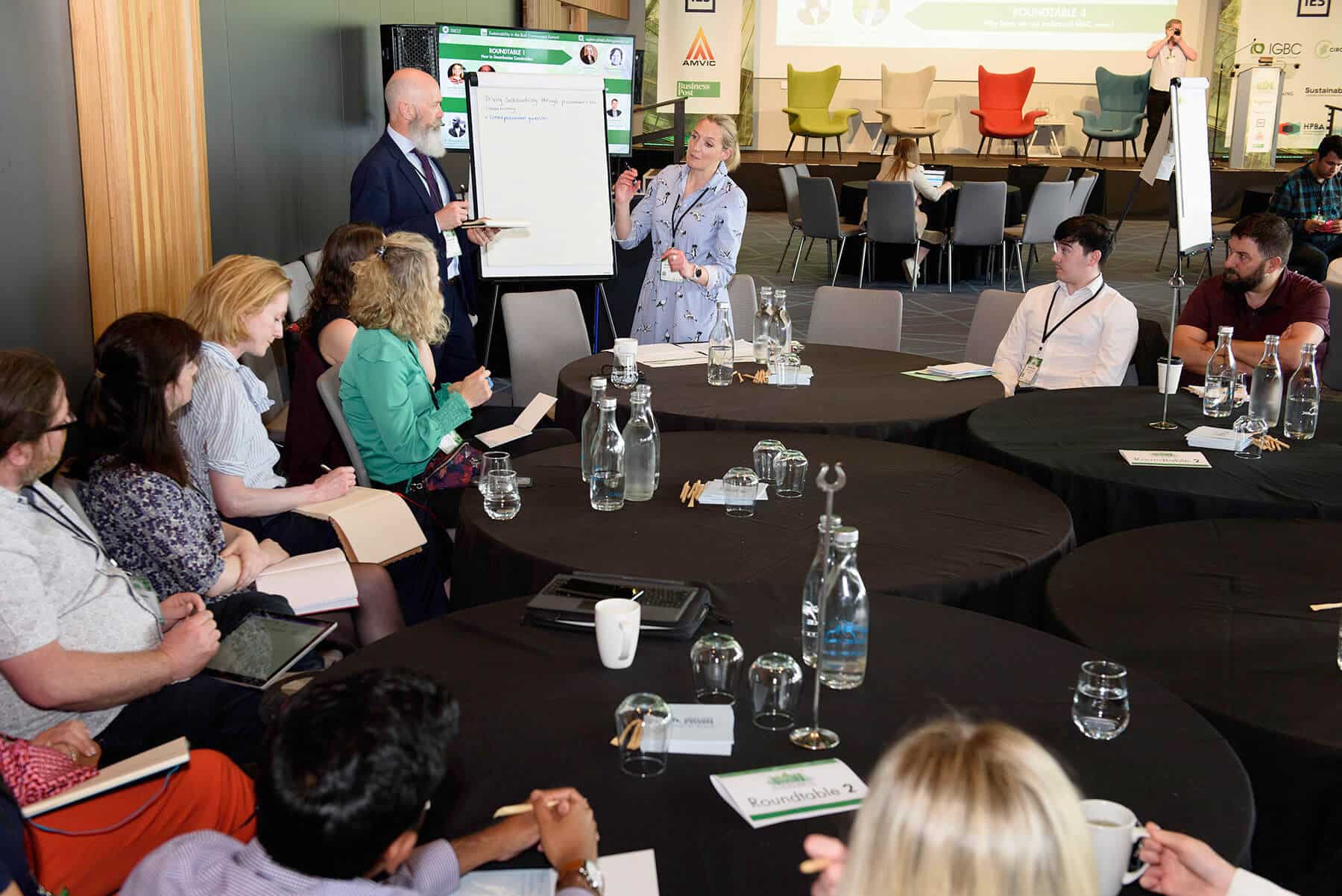
HPBA partnered with the Business Post to deliver the inaugural Sustainability in the Built Environment Summit in Croke Park in June 2025.
Topics included Modern Methods of Construction, Retrofit challenges, Public Sector procurement and the journey to 2030 and beyond.
Guest speakers came from the USA and Europe. There were 250 attendees on the day and very positive feedback.
For further information see here: Home – Sustainability in the Built Environment
BioDirect
BIODIRECT was funded by the InterTrade Ireland Synergy Programme which aims to scale cross-border collaboration, using cluster and network development supports to increase the impact of programmes with economic benefit to Ireland and Northern Ireland.
In June 2024, HPBA submitted an innovation challenge called the High-Performance Integrated Design Challenge: Modular, Adaptable and Circular Biomaterials for Sustainable and High-Performance Commercial and Residential Interiors, Ideal for New Construction and Retrofitting: https://cbcsw.ie/biodirect/high-performance-building-alliance-arcology-international/
The challenges were open to the innovation community including start-ups, SMEs, researchers and large companies to share their solutions, whether that be processes, products or technologies. An evaluation jury, comprised of challenge leads and the project partners, reviewed the solution providers to determine suitability. The selected solution providers received:
1:1 discussion with the challenge owner
1:1 support about funding opportunities to develop a project
Mentorship to realise the solution
Circular Economy Business Training
Opportunity to be selected to speak at the All-Island BioDirect Summit September 4th
Opportunity to display company / institute at the All-Island BioDirect Summit September 4th
For further information please see Launch of 10 All-Island BIODIRECT Challenges: Match-making Circular and Bioeconomy Solutions across Industries – High Performance Building Alliance
Irish Materials Working Group
Irish Materials Working Group
The HPBA is a member of the Irish Materials Working Group, an initiative established by MTU and the CircBio Cluster with the aim to accelerate the development of industries using biomaterials in Ireland by fostering collaboration, research, and innovation across the value chain.
By connecting farmers, processors, researchers, industry stakeholders, and policymakers, the group will drive policy development, market opportunities, and circular bioeconomy solutions for Irish biomaterials.
Our goal is to create high-value, low-carbon materials that support rural economies, decarbonisation, and circular design principles.
To achieve its goals, the Irish Materials Working Group will coordinate stakeholder collaboration across sectors to advance innovation in bio-based and circular materials. Activities will include mapping material value chains, identifying infrastructure and policy gaps, supporting pilot projects, and promoting knowledge exchange between research, industry, and government. The group will also organise thematic events and contribute to national and EU strategies that foster a sustainable and competitive materials economy in Ireland.

Southend Retrofit Project
Southend Retrofit Project
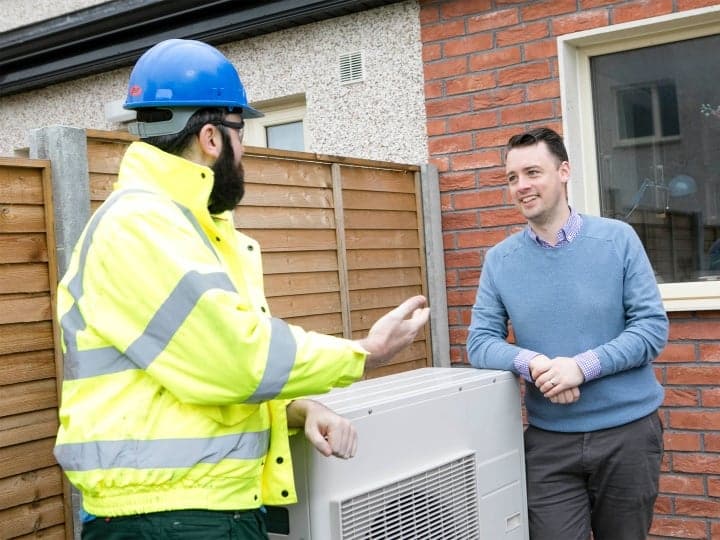
The Wexford Homes project in Southend, Wexford, demonstrates a community-led approach to retrofitting, significantly improving health, wellbeing, and energy efficiency in fuel-poor households. Spearheaded by the Wexford Town Sustainable Energy Community (SEC), Wexford County Council and partners including Southend FRC and HPBA, this initiative replaced outdated back boilers with modern systems like heat pumps, fostering a just transition to sustainability.
Project Background
Formed in December 2021, the SEC conducted a Southend Home Energy Survey revealing widespread reliance on back boilers and lack of central heating, exacerbating fuel poverty. An Energy Steering Group launched in September 2022 united Wexford County Council, SEAI, SETU, the Department of Health, and HPBA to drive retrofits under the Warmer Homes Scheme. Local events in November 2022 and May 2024 promoted grants, while a trusted energy champion from Southend Family Resource Centre (SFRC)—appointed in February 2023—guided residents through applications and behavioral changes.
Key Challenges
Many homes suffered from energy inefficiency tied to obsolete heating, contributing to dampness and health issues in a vulnerable community. Coordinating multi-stakeholder efforts and securing diverse funding streams required strong collaboration. Building trust for intrusive retrofits in tight-knit neighbourhoods demanded relatable local advocates.
Solutions and Implementation
Over 25 homes received upgrades, including heat pumps, supported by SEAI grants and community events for education. SETU’s co-designed research employed surveys, interviews, focus groups, and temperature sensors to evaluate impacts on health and wellbeing. The energy champion’s role—2 hours weekly under Sláintecare—proved pivotal, demystifying processes and ensuring post-retrofit success through trusted, on-the-ground support. To date over 200 individuals have received support.
Results and Impact
Feedback highlights warmer, healthier homes with reduced fuel costs, directly linking retrofits to improved wellbeing. Positive experiences stem from the champion’s explanations and partnerships, validating the model for replication elsewhere. HPBA presented the model to the UNECE Group of Experts on Energy Efficiency in 2024, identifying the importance of expertise in sustainable building alliances, blending technical upgrades with community empowerment for lasting change.
Click here to read the Southend Retrofit Project Report
The pilot is also featured in NESC Report No.36, published May 2025