
General News
Net Zero Construction Symposium Showcases Ireland’s Leadership in Sustainable Building

Feb
Net Zero Construction Symposium Showcases Ireland’s Leadership in Sustainable Building
On Wednesday, 21 January, the High Performance Building Alliance (HPBA) hosted a dynamic and well-attended Net Zero Construction Symposium in Wexford, drawing leading voices from across Ireland’s construction, sustainability, and innovation sectors.
The event was officially opened by Amanda Stewart, CEO of HPBA, and Cllr. Garry Laffan, Chair of the HPBA Board. Together, they set a collaborative tone for the day, welcoming technical experts, policymakers, educators, and industry practitioners united by a shared goal — advancing Ireland’s transition towards a sustainable, net-zero built environment.
“This symposium is about collective momentum,” said Amanda Stewart. “By connecting expertise across disciplines, we can accelerate Ireland’s journey toward decarbonisation and redefine how we design, construct, and retrofit for the future.”
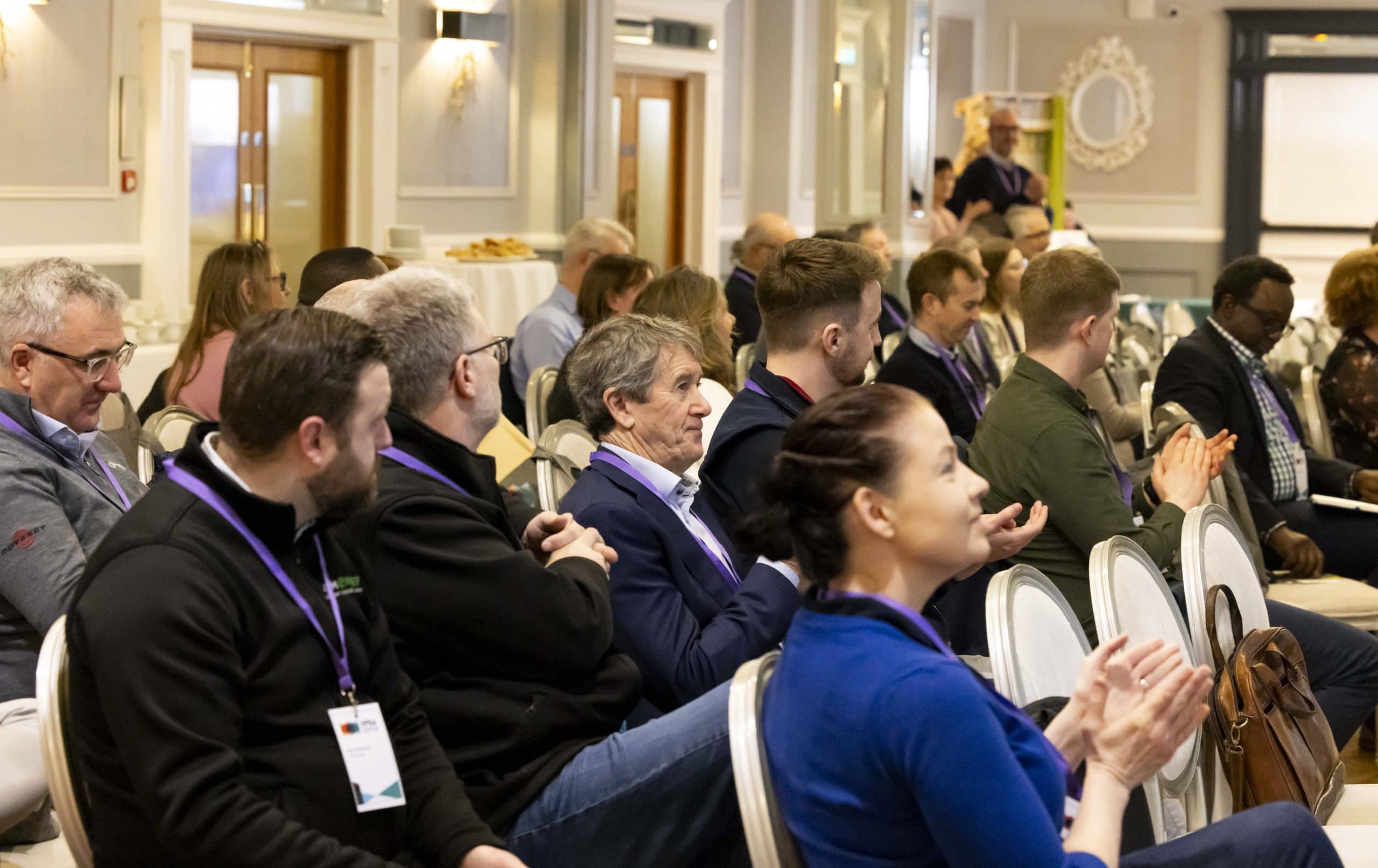
Exploring Ireland’s Pathway to Decarbonisation
The symposium opened with an inspiring keynote from Dr. Barry McCarron FCIAT, who underscored the critical role of retrofit innovation and systems-level thinking in achieving national net-zero targets.
A series of engaging panel discussions, chaired by David Scanlon of Resolve Partners, delved into the key themes shaping the sector — circularity in construction, skills and workforce development, business greening, modern methods of construction (MMC), and bio-based materials.

David Scanlon (Resolve Partners)

Dr. Barry McCarron (KORE Retrofit)
Circularity in Construction
The first panel, Circularity in Construction, featured Dave Garforth (RPM), Xavier Dubuisson (RetroKit), and Dr. Geraldine Brennan (IMR and CIRCULÉIRE). The discussion highlighted that sustainability requires not just regulatory frameworks but also behavioural and cultural change. Panellists stressed the importance of systems thinking to ensure circular, closed-loop approaches, calling on industry leaders to act decisively rather than wait for policy to catch up.
Students from SETU’s Bachelor of Business programme, specialising in Corporate Finance, attended the session as part of their ESG coursework, gaining valuable real-world insights into sustainability and industry innovation.

Pictured from left to right: Dave Garforth (RPM), Xavier Dubuisson (RetroKit), and Dr. Geraldine Brennan (IMR & CIRCULÉIRE)
Skills for a Sustainable Future
The second panel explored Ireland’s construction skills challenge, focusing on how education and inclusivity can drive progress. Contributors included Joanne White, Founder of Women in Construction Ireland; Nichola Long (WWETB); Sara Mullally (Sustainable HRM Skillnet); and Pascal Harte (SETU).
Speakers discussed strategies to embed sustainability across all roles and training programmes, ensuring that every member of the workforce understands their part in achieving net-zero goals. Encouragingly, participation by women in construction-related courses and careers continues to grow, reflecting positive industry change.

Pictured from left to right: Nichola Long (WWETB), Joanne White (WICI), Pascal Harte (SETU), and Sara Mullally (Sustainable HRM Skillnet)
Greening Your Business
The Greening Your Business panel brought together Yvonne Byrne (SEAI), Michael Kinchella (SEEA), Annette Rowsome (LEO Wexford), and Paul O’Reilly (Watt Footprint).
Key recommendations included conducting energy audits, leveraging available grants, and joining energy communities. Access to finance and awareness of supports remain challenges, but the panellists highlighted emerging business opportunities in resource efficiency, waste reduction, and sustainable packaging.

Pictured from left to right: Paul O’Reilly (Watt Footprint), Annette Rowsome (LEO Wexford), Michael Kinchella (SEEA), and Yvonne Byrne (SEAI)
Modern Methods of Construction
A thought-provoking fireside chat with Oluwasegun Seriki of Construction Cluster Ireland and researcher at TUD revisited the promise and challenges of Modern Methods of Construction (MMC). Despite longstanding awareness of MMC, limited domestic research presents barriers to broad adoption. Panellists urged increased collaboration and deeper research to ensure Ireland develops both the technical expertise and workforce capacity needed for sustainable modernisation.

Oluwasegun Seriki (Construction Cluster Ireland)
Bio-Based Materials and the Future of Construction
The final panel focused on bio-based materials, featuring insights from Stephen Barry-Hannon (BioDirect 2.0, MTU), Lavanya Bhandari (Ecoroots), Caroline Gethings (Anú Heritage), and Juan Morillas (Sisk).
While global demand for bio-based products is growing, Ireland still exports much of its raw material stock for processing abroad. To capture greater economic and environmental value, the panel emphasised the need to build domestic processing capacity and encourage market adoption, scaling, and industry buy-in. Carbon pricing was identified as one possible lever for accelerating progress.

Pictured from left to right: Caroline Gethings (Anú Heritage), Juan Morillas (Sisk), and Lavanya Bhandari (Ecoroots)
Looking Ahead
The Wexford Symposium showcased the strength of collaboration across industry, academia, and government in tackling the urgent challenges of climate change. Consistent themes emerged — the need for cross-sectoral cooperation, innovation in materials and methods, and expanded education pathways — all critical to delivering a built environment that is both high-performing and sustainable.
The HPBA extends heartfelt thanks to all speakers, partners, and attendees who contributed to such a vibrant and solution-focused event.
This gathering marks just the beginning of HPBA’s 2026 programme of initiatives and events aimed at driving Ireland’s net-zero transformation in construction.
Stay tuned for updates on upcoming workshops, training sessions, and collaboration opportunities at hpba.ie.


